Why Some Restored Historic Homes in Downtown Indianapolis Aren't For Sale Yet
August 27, 2026
August 27, 2026
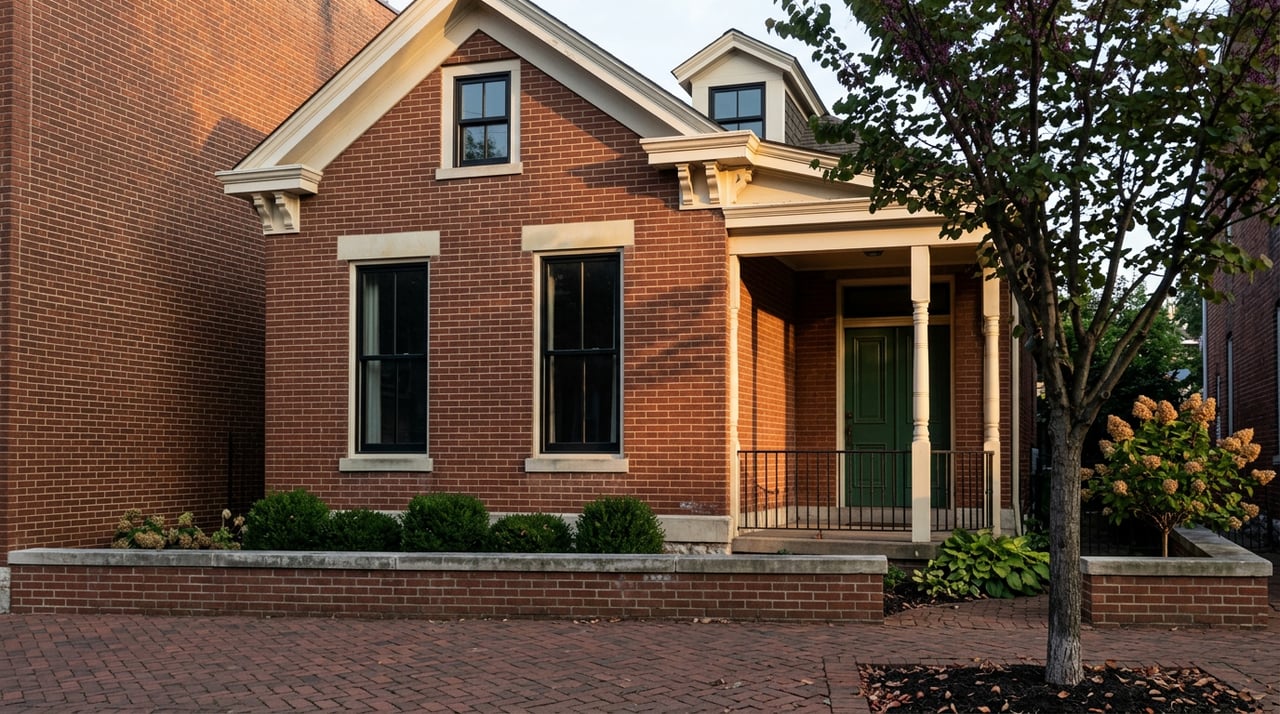
In March 2026, Indiana Landmarks put the Kemper House on the market. It sits at 1028 North Delaware Street, a few blocks from Monument Circle, built in 1873 and saved from demolition decades ago by Eli Lilly himself. The nonprofit restored it, used it as regional office space for more than thirty years, then let its president live there until 2025. Now it's listed at $800,000, and it comes with something most downtown listings don't: a protective covenant recorded by Indiana Landmarks that binds whoever buys it to the home's architectural character, independent of anything the city requires.
That covenant is the tell. Most buyers assume a "historic downtown home" means one thing: old, charming, subject to some design rules. In practice, a historic property in Indianapolis's core districts can carry two or three separate layers of restriction and incentive, stacked on top of each other, each with its own clock. Buyers who only look at the first layer miss the one that actually determines whether a beautifully renovated house is available to buy right now, or sitting in a holding pattern its owner can't easily exit.
If you're looking at property in Chatham Arch, Massachusetts Avenue, Lockerbie Square, Fletcher Place, Old Northside, St. Joseph, or the Wholesale District, the first layer applies to you whether or not you ever chase a tax break. The Indianapolis Historic Preservation Commission requires a Certificate of Appropriateness before the city's Department of Metropolitan Development will issue a building permit for exterior work in any of these districts. New windows, a different roof material, a rebuilt porch, all of it goes through IHPC review, typically at monthly public hearings downtown at the City-County Building.
This isn't a new or theoretical process. IHPC issued its first Certificate of Appropriateness in 1972 for a property in Lockerbie Square, and the commission has approved several hundred certificates a year across its districts in the decades since. As of this year, IHPC oversees 13 historic districts, 5 conservation areas, and 15 individually protected properties across Marion County. It has real teeth today, too. In August 2026, the commission held an emergency meeting over a proposed demolition at the former Martin University campus, a 113 year old Catholic church, and voted to grant it historic recognition specifically to stop the wrecking ball. That's not a rubber stamp process. It's an active commission willing to intervene on short notice.
The second layer is optional, and this is where most of the confusion starts. Indiana's Residential Historic Rehabilitation Tax Credit, administered by the state's Division of Historic Preservation and Archaeology, gives homeowners a state income tax credit worth 20 percent of qualified rehabilitation expenses, capped at the lesser of $10,000 per project or that percentage. To qualify, the home has to be at least 50 years old, listed individually or as a contributing property in the Indiana Register of Historic Sites and Structures, used as the owner's primary residence, and the work has to meet the Secretary of the Interior's standards and finish within two years, or five if filed in phases. None of this is required to get a Certificate of Appropriateness. A homeowner can do a fully CoA-approved restoration and never touch the state credit. Plenty do.
Here's the part that rarely comes up until someone is already under contract. The residential tax credit comes with a five year recapture rule. If the property changes hands within five years of the certified work being completed, the state claws back the credit. The taxpayer who claimed it owes it back.
Think about what that does to a seller's calendar. Someone who used the credit to help fund a kitchen and structural rehab in, say, 2024 has a real financial reason to stay put until that five year window closes, even if their life circumstances would otherwise point toward selling. A house that looks market ready from the sidewalk, freshly painted, obviously cared for, may simply not be listed yet because its owner is waiting out a tax clock that has nothing to do with the market and everything to do with when a certification form was filed.
For a buyer, this cuts two ways. First, it explains a pattern you'll notice if you spend any time watching these districts: some of the best-kept homes never seem to hit the market when you'd expect them to. Second, if you do find a recently renovated historic home for sale, it's worth asking directly whether the seller used the state credit and when the certified work was finished. If the answer puts the sale inside that five year window, the seller may be absorbing a recapture cost as part of the decision to sell, which can be relevant to how firm they are on price or how motivated they are to close quickly.
The credit also carries a statewide annual cap of $250,000 across every applicant in Indiana, administered on a state fiscal year running July through June, with unused amounts carried forward for up to 15 years. That cap has nothing to do with any individual sale, but it does mean the timeline for actually receiving the credit isn't always fast, which is one more reason a seller might have started a rehab years before finishing the paperwork that starts their five year clock.
The Kemper House shows a third layer that's easy to miss entirely. It's individually listed on the National Register and locally designated by IHPC, which means the standard Certificate of Appropriateness rules apply to any exterior work. But because Indiana Landmarks owned and restored it, the sale comes with a private protective covenant attached directly to the deed, a restriction that exists independent of city government and would survive even if IHPC's district rules ever changed.
This matters for downtown buyers because it's not always obvious from a listing sheet. A covenant like this doesn't show up as a line item the way square footage or lot size does. It shows up in title work, in deed language, sometimes only when your attorney or title company flags it during due diligence. If you're looking at a property that Indiana Landmarks previously owned, restored, or sold with conditions, that's a question worth raising early rather than during closing week.
None of this should scare a buyer away from these neighborhoods. It should change what you ask.
If you're the one holding a beautifully restored historic home downtown and wondering whether this is the year to sell, the same questions apply to you in reverse. Knowing exactly where you stand on that five year clock, and what a Certificate of Appropriateness already on file is worth to a buyer, changes how you time a listing and how you price it.
Do I need approval to repaint my house a different color if it's in one of these districts? If the home sits within an IHPC district, exterior changes, including some paint and material changes, typically require a Certificate of Appropriateness. Confirm the specific guidelines for your district before you start.
Does every old house downtown fall under this review? No. Only properties within a locally designated historic district or individually protected property fall under IHPC review. A home built the same year but outside district boundaries follows standard city permitting.
If a previous owner already claimed the tax credit, does that follow the house or the person? The credit is tied to the taxpayer who claimed it, and recapture applies to that taxpayer if the property is transferred inside the five year window. As a buyer, your interest is in understanding whether that's shaping the seller's timeline and terms, not in any liability of your own.
Historic downtown Indianapolis rewards buyers who ask better questions before they write an offer. If you're weighing a purchase in Chatham Arch, Lockerbie Square, Fletcher Place, or any of the districts around the Mile Square, Allison Steck can walk through a specific property's approval history, covenant status, and timing before you're locked into a contract. Request a Home Valuation to start the conversation, whether you're buying your first historic property downtown or deciding if this is the year to sell one.
Stay up to date on the latest real estate trends.

Allison offers her clients both the expertise to effectively compete in the changing market, and an elevated level of service that is unmatched in the business.