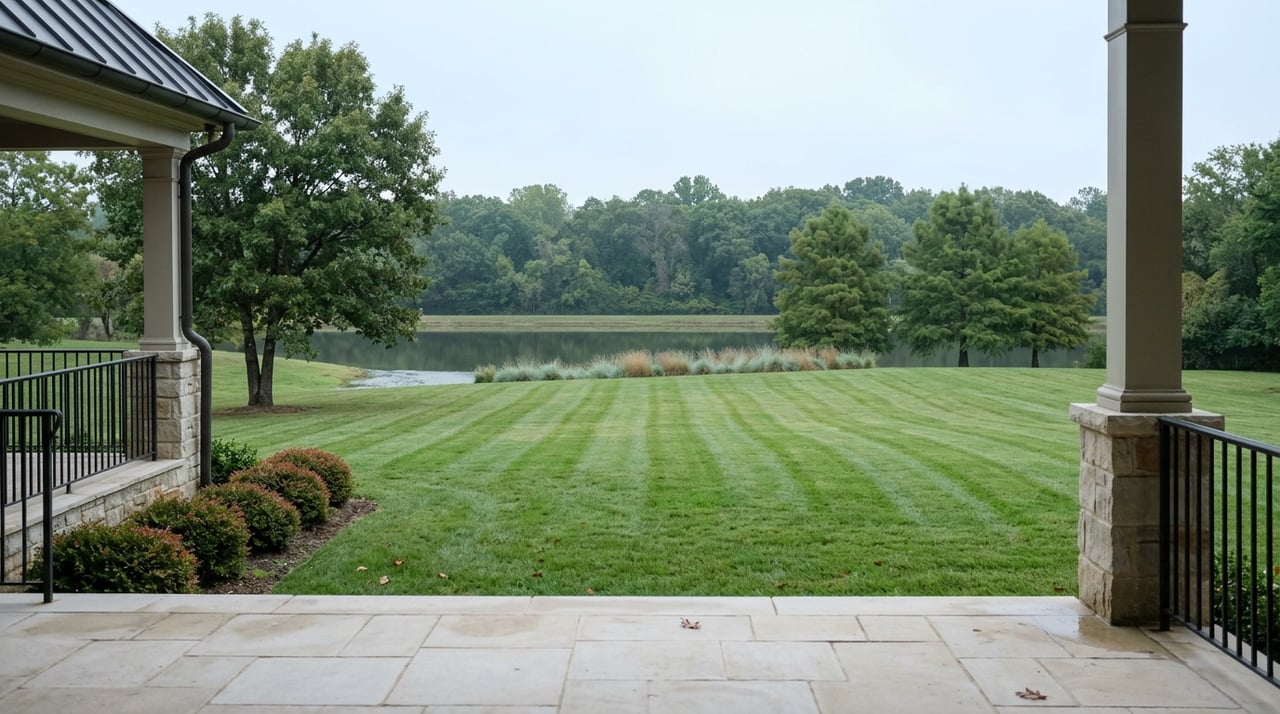
Why Your Geist Reservoir Dock Isn't Actually Yours to Sell
September 17, 2026
September 17, 2026
A dock is often the single feature that sells a Geist Reservoir home. It is also the single feature most sellers cannot produce a clean paper trail for on the day a buyer's attorney asks. That gap, not the price of the home, is what tends to slow these closings down.
Here is the part that catches people off guard: Geist is not a natural lake with private shoreline the way many buyers assume. Citizens Energy Group owns the reservoir itself along with a 20-foot shoreline easement and land near the dam, because Geist was built as part of Indianapolis's water supply system, not as a recreational amenity first. That means the strip of ground where most docks, patios, and firepits actually sit isn't fully the homeowner's to control. It's utility-owned land the homeowner has been granted permission to build on, and permission is a document, not a deed.
Any construction within that 20-foot easement, a dock, a deck, a retaining wall, even a firepit, requires its own application to Citizens Energy Group under what the utility calls its Morse and Geist Reservoir Policy. This approval sits entirely outside the county building permit and outside whatever an HOA's architectural review committee signs off on. A homeowner can have a fully permitted deck from the city and a fully approved addition from the HOA and still be missing the one document that actually covers the ground under the dock.
For a seller, that means the question isn't "does the home have a dock." It's "can I produce the CEG paperwork that says this dock is allowed to be there." Buyers increasingly know to ask, and title companies increasingly know to check, because a structure sitting on unpermitted easement land is a defect a lender's attorney will flag before closing rather than after.
Geist spans three counties and four municipalities, and homes around the reservoir fall under dozens of separate homeowners associations, each with its own architectural review process. That patchwork means "get HOA approval" is not one step. It's a different step depending on which community a house sits in.
Geist Harbours Property Owners Association, the largest association on the reservoir at around 2,388 homes across twelve communities, folds shoreline and dock matters into its own covenants and charges annual dues that fund things like landscaped common areas and monument upkeep. A smaller, volunteer-run community like Windsong takes a different approach entirely: its roughly 225 homes lease community boat docks directly through Geist Marina, so dock fees and maintenance are a marina contract, not an HOA line item. Windermere leans amenity-heavy, bundling tennis club access and pool membership into its structure rather than centering on dock management at all.
The practical effect for a seller is this: the document that proves dock rights exist might live with the HOA, or it might live with the marina, or it might be a private arrangement between neighbors that was never formalized anywhere. Before listing, a seller needs to know which of those three applies to their specific address, because a buyer's agent will ask for the document, not the explanation.
A dock that a family has used for twenty years without incident can still be the reason a closing gets pushed thirty days, if nobody can locate who actually issued the right to have it there.
Geist Marina runs its own slip lease calendar, separate from any home sale timeline. Renewals are due by March 15 each year, and new customers can face a waitlist for open slips, since availability runs seasonally from thaw to freeze. Current slip fees at the marina range from roughly $1,500 for a personal watercraft lift up to $6,630 for a covered single well with a lift, depending on slip type.
That renewal date matters more than it looks. A home listed in late winter with an active marina lease can lose that lease by the time a spring closing happens, if the seller doesn't renew before March 15 and the buyer isn't positioned to immediately take over the slip. A dock that was fully leased and functional during showings can become a dock with no active agreement attached to it by settlement, simply because two calendars, the marina's and the transaction's, never lined up.
Separate from anything specific to Geist, Indiana law requires sellers of most residential property to complete the Seller's Residential Real Estate Sales Disclosure, the state's standard condition form, and get it to the buyer before an offer is accepted. If the property sits within a homeowners association, the seller is also expected to disclose that fact and provide information about it, including the association's governing documents and the amount of assessments.
That statutory baseline was written for a generic Indiana home. At Geist, it runs headfirst into the reality that "the HOA's governing documents" might not be the only paperwork that matters. A buyer's attorney reviewing a straightforward disclosure form and a standard HOA packet has no way of knowing, from those documents alone, that a separate CEG easement application exists, or that the dock they are buying is actually leased through a marina and not owned outright with the house. The state disclosure covers what the law asks for. It does not automatically surface the reservoir-specific layer underneath it.
Sellers who move through this cleanly tend to gather the same handful of documents before a listing goes live, not after an inspection raises a question:
None of this changes what a Geist home is worth. It changes how long it takes to get from accepted offer to a closed sale, and whether a dock advertised as a selling point holds up under a buyer's due diligence instead of becoming a renegotiation point two weeks before closing.
Does Citizens Energy Group own my backyard? No. CEG owns the reservoir and a 20-foot shoreline easement, not the whole lot. Most of a waterfront property remains the owner's, but structures within that easement band fall under CEG's separate approval process.
If my HOA already approved my dock, do I still need CEG's sign-off? Yes. HOA architectural review and CEG's easement application are two different approvals from two different entities. One does not substitute for the other.
What if I can't find any CEG paperwork for a dock that's been there for years? That's worth addressing before listing, not during a buyer's inspection period. An older, undocumented structure is exactly the kind of gap that surfaces late in a transaction and creates unnecessary friction at a point when everyone involved would rather be closing.
Selling a Geist Reservoir home with water access is still one of the strongest positions in the Central Indiana market. It just requires more paperwork gathered up front than a typical listing, and knowing which of the reservoir's three separate authorities holds the document you need. If you're weighing a sale and want a clear read on what your specific property will require before it goes live, Allison Steck can walk through it with you and help you request a home valuation grounded in what your dock, your HOA, and your paperwork actually support.
Stay up to date on the latest real estate trends.





Allison offers her clients both the expertise to effectively compete in the changing market, and an elevated level of service that is unmatched in the business.